For many people, the bedroom is the only place with room for a desk. Working where you sleep can be challenging, since it blurs the line between work and rest. But with thoughtful placement, compact furniture and a few routines, a bedroom office can be both functional and restful.
This guide shares practical ideas for setting up a home office in a bedroom. It is general information, not medical or sleep advice. If you have sleep concerns, consult a health professional.
Choose the Right Spot
Consider Placement
- Near a window for natural light, positioned to reduce glare. See home office lighting guide.
- Facing away from the bed if possible, so the bed is not in view while you work
- Near outlets for power
- Out of walkways so you are not bumping into furniture
Use Underused Spaces
- Corners
- Closets
- Alcoves
- The space at the foot of the bed
Choose Compact Furniture
- Floating or wall-mounted desks save floor space
- Fold-down desks disappear when not in use
- Ladder desks combine storage and workspace
- Compact chairs fit small spaces. See ergonomic office chair buying guide.
Avoid working from bed when possible, since it can be hard on posture and make it harder to separate work from rest.
Separate Work and Rest
Visual Separation
- Room dividers or folding screens
- Curtains in front of a closet office
- Bookcases as partial dividers
- Rugs to define the workspace
Hide Work at Night
- Close laptops and put away papers
- Cover monitors or use fold-down desks
- Use a cabinet desk that closes
Mental Separation
- Start and end work at consistent times
- Use a “commute” ritual, such as a short walk
- Change clothes for work
Lighting
- Use task lighting during work
- Switch to warm, dim lighting in the evening
- Use smart bulbs to change lighting between work and rest
Storage
Bedrooms already store clothes and belongings, so office storage should be compact:
- Vertical shelves above the desk
- Under-desk drawers
- Rolling carts that tuck away
- Under-bed storage for supplies
Cable Management
Cables can make a bedroom feel cluttered. Use trays, sleeves and clips. See cable management ideas.
Noise and Calls
- Soft furnishings like rugs and curtains can absorb sound
- Headphones with microphones improve call quality
- Close doors during calls
- Coordinate schedules with roommates or partners
Video Call Backgrounds
Your bedroom may appear on video calls. Options include:
- Positioning your desk so the background is a wall or shelf
- Using a room divider behind you
- Using virtual or blurred backgrounds
- Keeping the background tidy
Shared Bedrooms
If you share a bedroom:
- Discuss work hours and quiet times
- Use focused desk lamps rather than overhead lights early or late
- Use headphones
- Keep the workspace tidy
Comfort and Air
Bedrooms can get warm with electronics running. Ensure ventilation, use fans if needed and keep air moving.
End-of-Day Routine
- Close work apps and laptop
- Clear the desk
- Put papers away
- Turn off monitors and task lighting
- Switch to evening lighting
A consistent routine can help you transition from work to rest.
Budget-Friendly Ideas
- Use an existing dresser as a standing desk if heights work
- Repurpose a small table as a desk
- Use curtains instead of dividers
- Shop secondhand furniture
Renter-Friendly Ideas
- Freestanding desks and shelves
- Tension rods for curtains
- Adhesive hooks
- Clamp lamps
Questions to Ask Before Setting Up
- Where can a desk fit without crowding the bed?
- Can you face away from the bed while working?
- How will you hide work at night?
- Is lighting adequate for work and rest?
- Do you share the room with someone?
Choosing Colors and Decor
Choose desk furniture and accessories that match your bedroom’s style, so the office feels like part of the room rather than an intrusion. Wood tones, soft colors and simple shapes often blend well. Avoid bright, harsh task lighting as your only light source, and add warm lamps for the evening.
Sleep-Friendly Habits
- Turn off notifications after work
- Charge devices away from the bed if possible
- Keep work materials out of sight at night
- Use warm lighting in the evening
Working From Bed Occasionally
If you sometimes work from bed, use a lap desk or laptop stand and support your back with pillows. Keep it occasional rather than daily, and return to your desk for longer work sessions.
Making the Most of Closet Space
Closets can hold a desk, shelves and storage. Remove or open doors, add lighting and ventilation and make sure your chair has enough room. Curtains can hide the space at night.
Storage for Work Equipment
Store work equipment together in one place, such as a drawer, cabinet or bin, so it can be put away quickly. Laptop sleeves and cable pouches make packing up simple. If your employer issued equipment, store it securely and follow their guidance for care and security.
Air and Temperature
Computers and monitors produce heat. In a small bedroom with closed doors, the space can warm up during the day. Open windows when weather allows, use a fan or adjust the thermostat. Turn off monitors at the end of the day.
Choosing a Chair That Fits the Room
A bulky office chair can dominate a bedroom. Look for chairs with a smaller footprint or a design that blends with your furniture, while still offering the adjustments you need for comfort.
Frequently Asked Questions
Is it bad to work in your bedroom?
It can work with separation and routines. Some people find it harder to switch off, so boundaries help.
Should I work from bed?
Many people find a desk more comfortable for longer sessions and better for separating work and rest.
How do I hide my desk at night?
Use fold-down desks, curtains, room dividers or covers.
What desk works best in a bedroom?
Compact desks like floating, fold-down or ladder desks.
How do I make video calls look professional?
Choose a tidy background, use dividers or virtual backgrounds and light your face well.
The Bottom Line
A bedroom office works best with compact furniture, thoughtful placement and clear separation between work and rest. Use lighting, storage and routines to transition from work to evening, and hide work at night when possible.
Editorial note: Home Desky is independent and reader-supported. This guide is based on research into manufacturer documentation, published specifications and widely accepted best practices; we have not been paid to mention any product. If we add affiliate links in the future, they will be clearly disclosed per our Affiliate Disclosure.
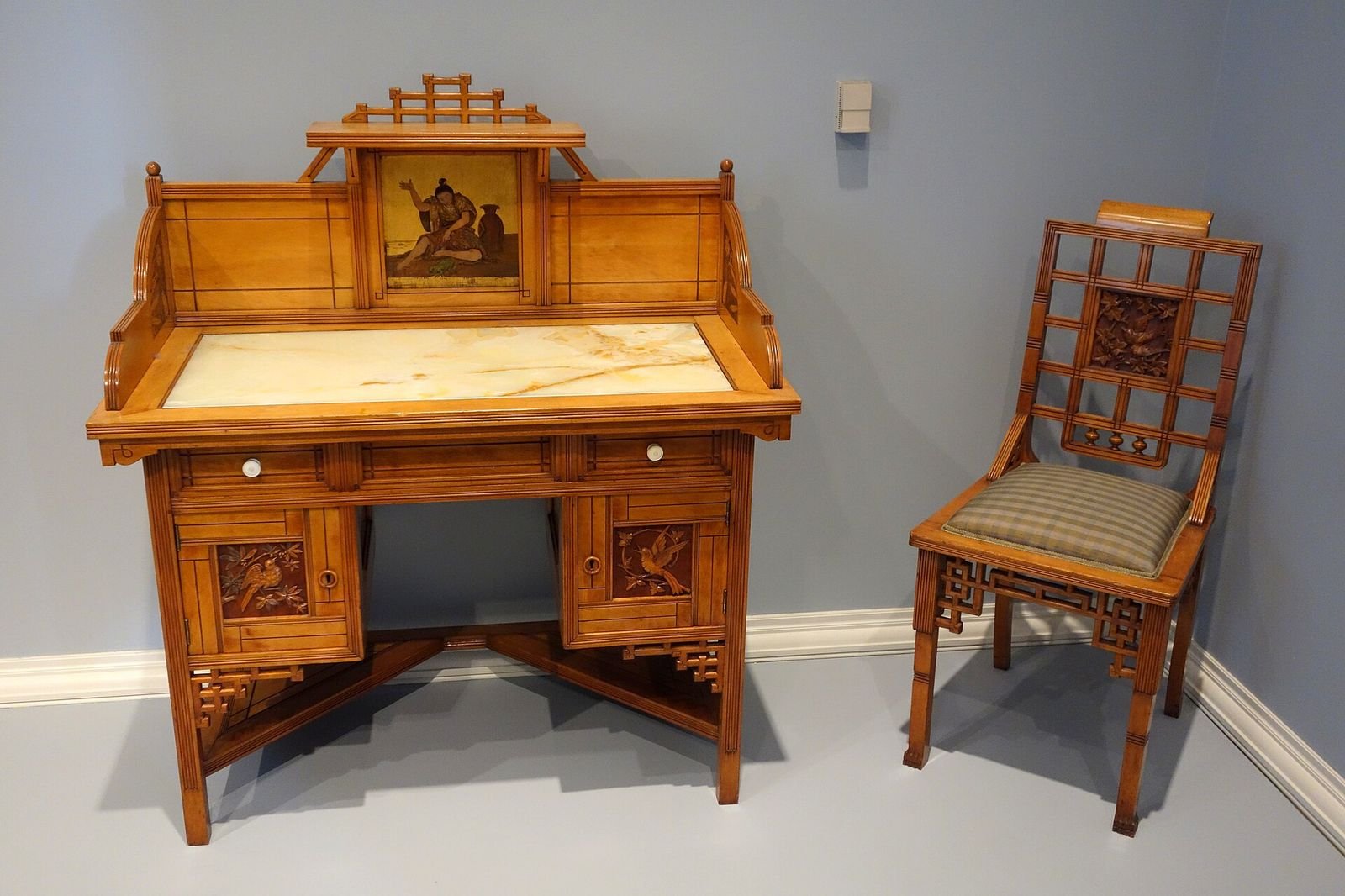
Photo: Bedroom Suite (desk) by Mitchell & Rammelsberg Furniture Company, Cincinnati, c. 1880, maple, painted and gilt panels, ivory, onyx, mirror glass – Cincinnati Art Museum – DSC03131 by Daderot, CC0 1.0